Have a look at your business through a customer's eyes for a minute.
The sign over the door is one shade of green. Your Instagram posts are a mish-mash of different styles and fonts, fonts you picked because it looked nice that day! The poster for your Christmas event was knocked together in Canva at eleven o'clock at night and looks nothing like you. And the lunch menu? That's still the one from three years ago, with the old logo.
None of this is terrible on its own. But put it all side by side, and it doesn't look like one business. It looks like four.
I see this all the time, and it happens to good businesses, not careless ones. Here's why it happens, why it matters more than you'd think, and what you can do about it.
Why do brands drift?
Brand drift rarely happens in one go. It creeps in, one small job at a time without you noticing.
Lots of hands, no referee. You make the social posts, a staff member does the window poster, the printer "tidies up" your logo for the van livery, and a friend helps with the website. Everyone means well, and everyone does it slightly differently.
The guidelines are in a drawer. Maybe you had a brand designed years ago and got a lovely set of guidelines. But if nobody opens them when they're making something, they may as well not exist.
Quick fixes add up. Templates and AI design tools are handy when you're under pressure. The catch is that they're built to look good for anyone, which means they nudge your brand towards looking like everyone else's.
There's never enough time. When you're running a business, design is the job that gets done last, fastest, and by whoever's free. That's completely understandable. It's also exactly how drift happens.
Why it matters
It's easy to think consistency is a "nice to have" for big brands with marketing departments. It isn't. For a small business it's arguably more important.
Recognition builds trust. People trust what they recognise. When your customer sees your colours, your type and your style again and again, in the same way, it starts to feel familiar, and familiar feels safe. Every inconsistent piece chips away at that.
It signals how you run your business. Fair or not, people read your visuals as a clue to everything else. A brand that looks pulled-together suggests a business that's pulled-together. A patchwork one raises a small question mark.
It affects what you can charge. Premium prices need a premium feel. It's hard to justify top-end prices when your materials look like they came from three different businesses.
Generic is invisible. In a feed full of templated and AI-generated graphics, the businesses that stand out are the ones that look unmistakably like themselves. If your brand blends in, people scroll straight past.
Is your brand drifting?
Tick anything that sounds familiar. Be honest, nobody's watching.
0 of 5 ticked
Five ways to fix it
1. Put everything on one table
Gather up everything your customers see: your sign, menu, business cards, a few social posts, your website on your phone, flyers, packaging, even your email signature. Lay it all out together. It's the quickest way to spot what's working and what's drifted, and it can be a real eye-opener.
2. Get your rules written down
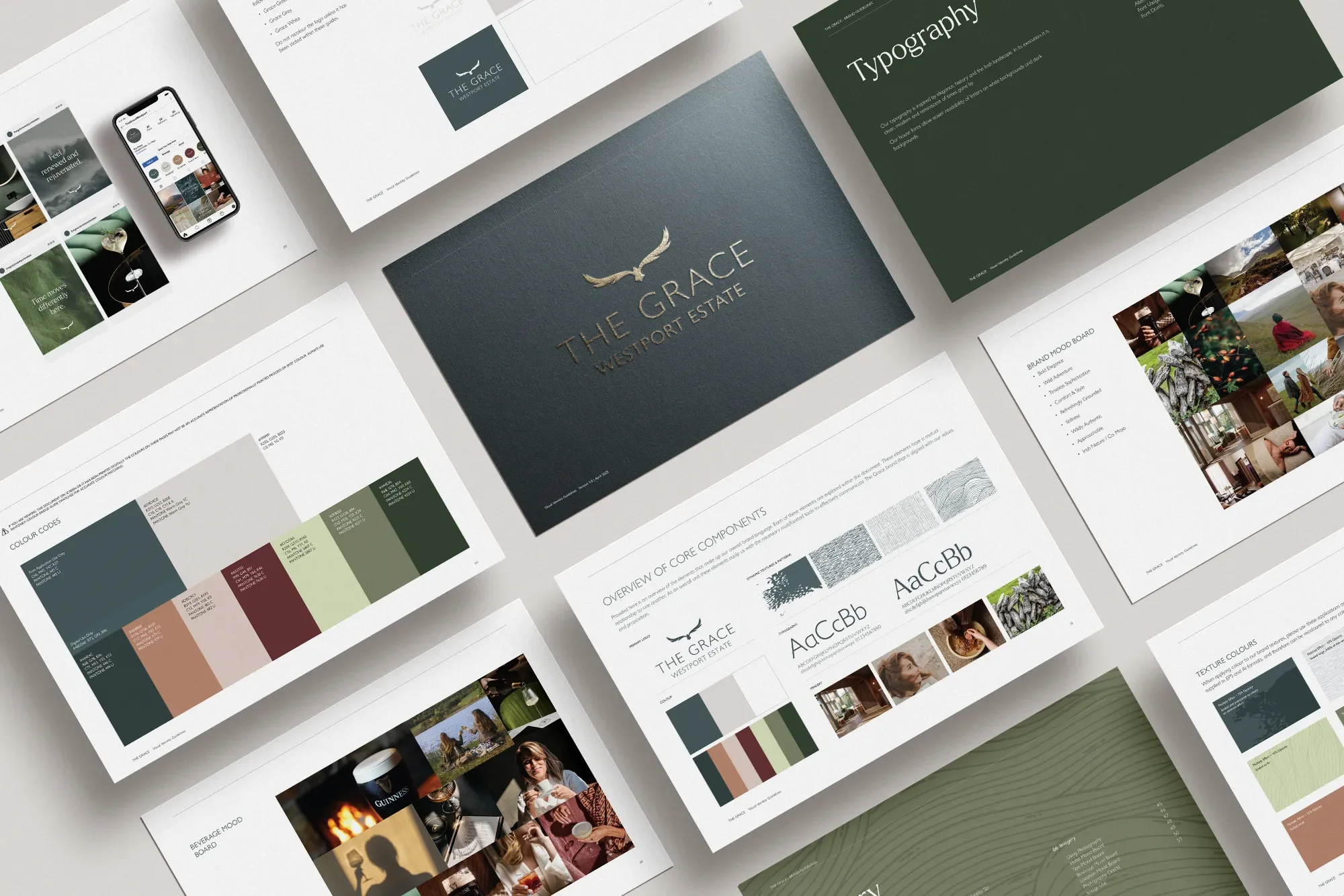
If you have brand guidelines, dig them out and make sure everyone who makes anything has a copy. If you don't, even a simple one-page guide helps: your logo versions and when to use each, your exact colours, your fonts, and a few examples of what "on-brand" looks like.

3. Set up templates for the things you make often
Social posts, event posters, menu inserts, price lists. Anything you make regularly should have a properly designed, on-brand template, so a quick job doesn't mean starting from scratch and guessing.
4. Make one person the guardian
Someone needs to look at everything before it goes out and ask, "Does this look like us?" In a small business, that's often you. Which brings me to the catch: it's another job on a very long list.
5. Plan ahead
Most off-brand work happens in a rush. If you know what's coming up each month (the Christmas menu, the summer event, the new product), you can get it designed properly ahead of time instead of panicking the night before.
Where a design retainer comes in
If steps four and five made you tired just reading them, you're not alone. This is exactly why I offer a monthly design retainer.
For nearly ten years I worked in-house at a large organisation, as part of the team that every campaign, poster and presentation came through. I saw first-hand what having a designer who knows your brand inside out does for consistency. Nothing goes out looking off, because the same person who knows the rules is the one making everything.
A retainer gives small businesses that same thing, without the cost of hiring. Each month we plan what's coming up, you send me what you need, and everything you put out looks like you, not like a template and not like everyone else's feed.
See how my design retainers work →
And if your brand needs more than tidying up, if it's genuinely outgrown your business, that's a different conversation. Have a look at branding →

The bottom line
Consistency isn't about being boring or rigid. It's about showing up as the same business, every time, in every place your customers meet you. Do that, and people start to recognise you, remember you and trust you. In a world of lookalikes, that's a real advantage.
